|
|
Last Modified on Apr 21, 2026
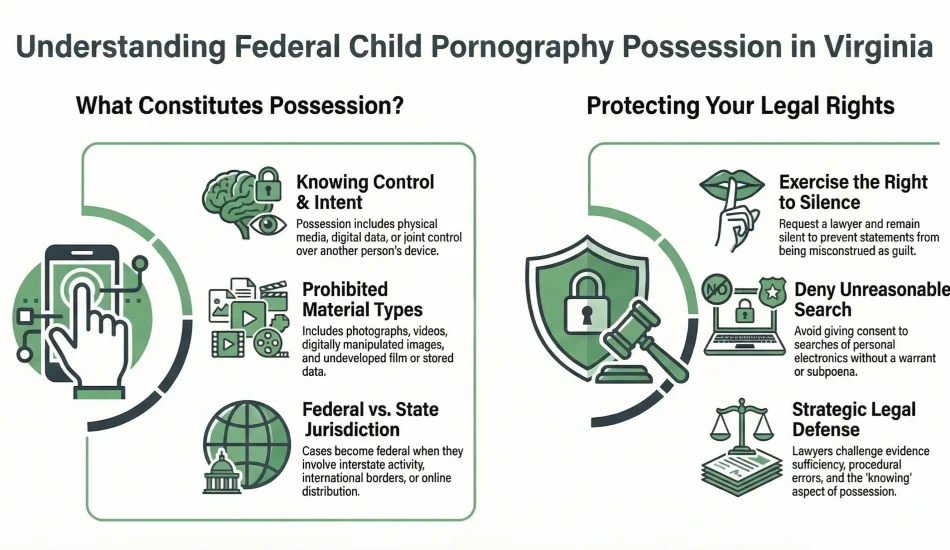
Under federal law in Virginia, possession of child pornography generally means knowingly having control over material that shows the sexual abuse or exploitation of a minor or knowingly having the power and intention to control it. The content explains that possession can apply to many types of visual depictions, including photographs, videos, digital or computer-generated images and videos, modified or digitally manipulated images or videos of a minor, electronically stored data that can be converted into child pornography, and even undeveloped film or videotape. A person may also face possession allegations if they had joint possession with another individual, such as when material was on someone else’s electronic device but they still had knowing control over it. Because these cases often involve digital material that crosses state lines, understanding what counts as possession under federal law is important when facing child pornography charges in Virginia.
Child pornography charges often straddle a line between being a state and a federal charge, so many ask, “What counts as ‘possession’ of child pornography under federal law in Virginia?” Johnson/Citronberg can explain your federal child pornography charges, along with the potential impact of child pornography possession on your future.
Understanding Possession in Federal and Virginia Child Pornography Laws
According to Virginia child pornography laws, it is illegal to knowingly possess material showing the sexual abuse or exploitation of a minor. Child pornography possession is a felony in Virginia. Federal laws also outlaw possession of child pornography.
Whether you are facing Virginia state or federal child pornography charges, you can be charged regardless of the type of visual depictions involved. Types of child pornography that are illegal to possess or otherwise interact with include material such as:
- Photographs
- Videos
- Digital or computer-generated images and videos
- Modified or digitally manipulated images or videos of a minor
- Electronically stored data that can be converted into child pornography
- Undeveloped film or videotape
To be in your possession, you must either:
- Have control over the child pornography.
- Knowingly have the power and intention to have control over it.
It is important to understand what counts as possession of child pornography under federal law specifically, as digital footprints often transcend state lines. You can be guilty of possession if you have joint possession with another individual, such as if the material was on someone else’s electronic device, but you still had knowing control over it.
When Is a Case a Federal Child Pornography Case?
Despite having similar definitions of child pornography possession, there is a difference between state and federal charges. A child pornography attorney can determine whether your case is under state or federal jurisdiction. In 2024, 45.8% of child pornography charges were for possession. If you are facing federal charges, hire a child pornography lawyer with experience in federal courts, such as one at Johnson/Citronberg.
A child pornography case can be prosecuted by the state or the federal government. Whether the case is prosecuted in federal court depends on a number of factors, including whether the investigation was initiated by federal law enforcement, if the case is more severe than the typical case, and the individual U.S. Attorney’s Office’s informal policies. Because these cases are so high-stakes, our firm works to protect privacy and reputation during federal child pornography investigations to mitigate the long-term impact on our clients.
Why You Should Hire a Child Pornography Lawyer
If you have been charged with possession or arrested on suspicion of possessing child pornography, a child pornography attorney can explain what counts as possession. They can also answer any other questions you have about federal and Virginia child pornography laws, along with the penalties involved in your case.
The investigation into a child pornography possession case is often lengthy and complex. A lawyer can defend your rights during this investigation, such as:
- Your right to remain silent. When you are arrested, request to contact a lawyer, and then remain silent. Law enforcement can use what you say against you, gathering evidence even when it may seem like they are asking reasonable questions. A lawyer can prevent accidental self-incrimination or any statement that may provide confusion or be misconstrued as guilt.
- Your rights against unreasonable search and seizure. Law enforcement often relies on searches or seizures of your property and personal electronics to gather evidence of possession. Avoid giving your consent to any search and seizures. Your lawyer can prevent law enforcement from conducting these without probable cause, a warrant, or a subpoena from the court.
A lawyer can work relentlessly to pursue outcomes such as dismissed or reduced charges, which can prevent you from enduring the intense penalties for possession under federal law. Depending on your situation, they may:
- Build a defense based on police misconduct or procedural errors.
- Challenge whether there is enough evidence against you for a conviction.
- Prove that you were not guilty of knowingly possessing illegal material.
FAQs
Is Child Pornography Protected by First Amendment Rights?
No, child pornography is not protected by the First Amendment. The First Amendment protects many forms of art, images, and videos under freedom of expression. However, federal child pornography laws do not consider child pornography as freedom of expression. The harm to a child’s safety and its inappropriate nature make creating or possessing this material illegal.
Are Penalties More Severe for Federal Possession Charges Than Virginia Charges?
Yes, penalties are often more severe for federal child pornography possession charges compared to charges in Virginia. Regardless of whether your case is under state or federal jurisdiction, you could potentially be fined thousands of dollars and face decades in prison, with the average term being 65 months. A conviction leaves a permanent mark on your criminal record, impacting your family relationships, employment, and housing.
Reach Out to an Experienced Child Pornography Attorney at Johnson/Citronberg
For years, Johnson/Citronberg has been defending against some of the most severe and complex federal cases. We understand that federal child pornography possession charges can be intimidating, but our compassionate attorneys can guide you through each step of this case, all while working to protect your future.
If you have questions about your possession of child pornography case or are looking for an attorney who can provide aggressive, strategic representation, contact Johnson/Citronberg for a confidential case consultation.