|
|
Last Modified on Apr 15, 2026
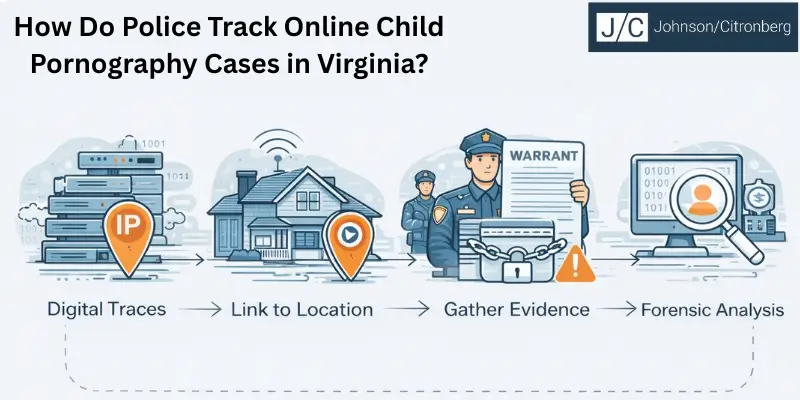
Police track online child pornography cases in Virginia by relying on digital information, long-term evidence collection, and a methodical investigative process that often develops behind the scenes before any visible action is taken. These investigations commonly begin with digital activity such as IP addresses, timestamps, session records, and other online indicators that suggest suspected illegal material was accessed or downloaded. From there, law enforcement works to determine whether the activity is linked to a larger pattern, identify the internet connection and possible service location, and examine whether devices or networks may have been shared. After enough digital evidence is collected, investigators may seek a search warrant to analyze phones, computers, networking equipment, and storage devices through forensic analysis. Because these cases often focus first on networks and access points rather than specific individuals, understanding how police build online child pornography cases in Virginia is important for anyone facing such allegations.
Answering the question, “How do police track online child pornography cases in Virginia?” calls for knowing how today’s investigations are reliant on digital information and long-term evidence collection, in addition to the broader demographic context. In 2026, Virginia law enforcement is approaching such cases intricately and methodically, commonly developing these cases behind the scenes before taking action that makes the case known and visible. It is critical to understand the Virginia federal child pornography investigation process to see how authorities build these digital cases.
Why Choose Us?
At Johnson/Citronberg, PLLC, our attorneys have been selected in the District of Columbia Super Lawyers, Georgia Super Lawyers, and Virginia Super Lawyers. Our sterling reputation demonstrates our commitment to excellence and our record of success. Our team includes a skilled Virginia child pornography lawyer who can provide the defense necessary for complex internet-based allegations.
Digital Activity: A Starting Point for Investigations
The majority of online child pornography investigations in Virginia typically start with digital indications as opposed to an in-person report. Servers may be logging digital data like IP addresses, timestamps, and session activity when suspected illegal material is accessed or downloaded in the online space. This may trigger investigators to look into whether this incident was isolated or part of a larger pattern. You can learn more about what happens after an IP address is linked to child pornography in Virginia and how investigators move from a data point to a physical location.
This stage in the investigation typically places emphasis on networks and connections, not people, as an internet connection can be linked to a place, but not an individual.
Virginia’s Demographic Profile and Child Pornography Investigations
The median age in Virginia is 39.3, which closely mirrors national averages. This is indicative of a population in which internet use is part of day-to-day activity across all age groups, not limited to one population group. Therefore, when police are investigating, they’re not using any assumptions about background or age. They are instead relying on internet behavior patterns and digital evidence, keeping in mind that this activity spans across generations of Virginians.
Available state data on pornography and obscene material cases show that 22% of known offenders are female, while the remaining 78% are male. Age-range data further shows just how broad these investigations can be, as reported figures include 983 under the age of 18, 266 from age 18 to 24, 268 from age 25 to 34, 208 from age 35 to 44, and 115 from age 45 to 54.
Although these numbers can provide some context, they don’t have any influence on decisions made during investigations, as law enforcement should be putting evidence-based investigative approaches first, as opposed to profiling.
Household Access and Network Considerations
During an investigation, law enforcement also looks to understand whether a household environment may be linked to an internet account. In Virginia, the under-18 age group, which was found to be associated with the greatest number of child pornography cases, has a poverty rate of 11.7%. This can significantly influence how devices end up being shared in the home and how the internet is accessed.
After a connection has been identified, law enforcement works to understand if many people had access to one network, if devices were shared, or if an unauthorized user could have potentially connected. An experienced Virginia internet sex crime lawyer can help investigate these shared access points to build a strong defense.
From Data Collection to Forensic Analysis
After enough digital evidence has been collected, an investigator may try to get a search warrant to analyze phones, computers, networking equipment, and storage devices. This evidence may help them to identify who actually used a device, as finding a shared access point or digital network linked to illegal activity is not sufficient to implicate an individual. This complexity is one of the reasons why people may choose to hire a child pornography lawyer.
FAQs
What Digital Tools Do Police Use to Track Online Child Pornography in Virginia?
Digital tools that police use to track online child pornography activity in Virginia may be commonly utilized by task forces on the federal level and then shared with more local cybercrime units and the Virginia State Police. Authorities use cutting-edge tracking software that can identify videos and images with illegal content. Investigators may be looking for such material on encrypted applications, cloud storage platforms, or peer-to-peer networks.
How Do Police Monitor File-Sharing Networks and Online Platforms to Make Child Pornography Arrests?
Police monitor file-sharing networks and online platforms by conducting operations of an undercover nature on cyberspaces like chat platforms, forums, and other networks. By making their own user profiles to blend in, they are able to clearly see who’s talking to whom, how files are being shared, and the identifiers that are attached to each of those interactions. Information collected during these investigations can be used to obtain a search warrant.
How Is Child Pornography Online Activity Linked to a Physical Address or Person?
Online activity is linked to a physical address or person through digital data like account information, timestamps, and IP addresses. An internet service provider may be subpoenaed to identify the user associated with a certain IP address at a certain time, which can then help investigators identify the associated business or residence.
Can Virginia Police Track Child Pornography Activity That Occurred in the Past?
Yes, Virginia police can track child pornography activity that occurred in the past. This is because many Internet service providers keep records for years at a time, giving law enforcement access to look into online activity that happened months before, or even much further into the past. Therefore, Virginians can be confronted with charges for something that they had forgotten about because it happened long ago.
Are Child Pornography Suspects Notified When Tracking Begins?
No, child pornography suspects are not notified when tracking begins by federal or state authorities because online child pornography investigations in Virginia are typically carried out undercover. Oftentimes, individuals do not know that they’re being investigated until law enforcement files a search warrant, issues a subpoena, or even officially files charges.
Hire a Child Pornography Lawyer Today
Investigations that involve online tracking are typically much more sophisticated than you may realize. This means that when law enforcement finally does make contact, they could already have a case built up and significant digital data collected. People who wait to act can see their legal options significantly limited.
Johnson/Citronberg, PLLC, knows how to handle complex federal internet crimes in Virginia criminal cases, thanks to decades of combined experience. Our legal team works hand in hand with leading forensic experts, and we call digital evidence into question aggressively. If you’re under the impression that law enforcement is investigating you, contact us immediately to schedule your confidential consultation.