|
|
Last Modified on Apr 22, 2026
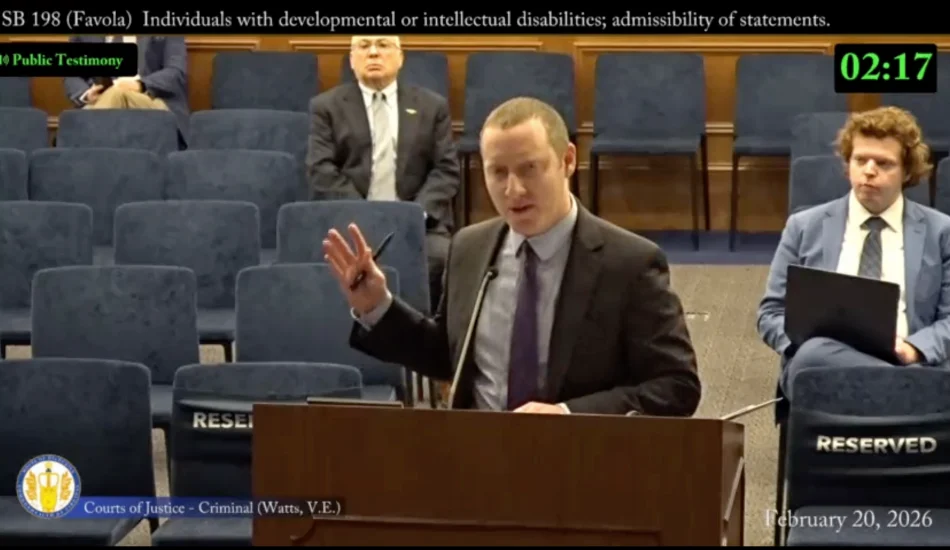
Johnson/Citronberg is actively engaged in shaping Virginia’s criminal laws to protect criminal defendants with autism. Cary Citronberg, a partner at Johnson/Citronberg, recently testified before the Virginia Senate committee on Courts of Justice as an advocate for individuals with autism. There are two major pieces of legislation now pending before the legislature which would have a significant impact on criminal cases involving autistic individuals.
You can read more on how we defend autism cases here.
Statements Made to Law Enforcement – SB 198
Virginia Senate Bill 198 would prohibit the admission of any statements made by an individual with a “developmental disability or intellectual disability” unless a court were to find that the decision to speak with law enforcement was not caused by the individual’s disability. Autism is a covered disability under the proposed legislation.
Autism is a communication and social processing disability. Adults with autism typically have a significant gap between their chronological age and their social and emotional development. For instance, a high-functioning 40-year-old adult with autism may have the social adaptability age of young child.
This developmental gap can have serious consequences during a criminal investigation. Individuals with autism may struggle to understand legal concepts, such as the right to remain silent. They may also be highly compliant to law enforcement’s requests and vulnerable to suggestion. As a result, they may answer questions posed by the police without fully understanding their rights or the consequences of their statements.
The right to remain silent is a bedrock principle of the American justice system. It exists to protect individuals form coercion and misunderstanding. Yet, for many people with autism, this safeguard is rarely used and easily skirted by law enforcement. SB 198 addresses this gap in protection, and it ensures that statements or confessions that are the product of an individual’s autism are not admissible in criminal proceedings. In doing so, SB 198 reinforces fundamental fairness and ensures that constitutional rights are meaningful for everyone, including people with Autism Spectrum Disorder (ASD).
Dismissal of Charges for People with Autism
While Virginia law currently allows for the dismissal of charges for some criminal defendants with autism, Virginia Senate Bill 416 would allow for the dismissal of the charges prior to a plea of guilty. This would be a major change in the law, because under VA Code 19.2-303.6, a defendant must currently wait until he has entered a guilty plea (or until after the court finds facts that would justify a finding of guilt) to receive a dismissal. You can learn more about the specific process of autism and the dismissal of criminal charges in Virginia under existing statutes.
This proposed change in the law would allow a criminal defense lawyer to file a motion requesting a hearing to determine the appropriateness of a deferred disposition as soon as the case reaches the Circuit Court. This means that courts can address the issue of autism on the front end of the case instead of the back end. Currently, defendants with autism must often take a large gamble – hoping that the court will agree to dismiss a case only after they have entered a guilty plea. Under the proposed legislation, a defendant would find out much sooner if a court is willing to dismiss the charges.
Our criminal defense lawyers at Johnson/Citronberg have successfully represented clients with autism for years. If you or someone you know has autism and has been charged with a crime, give us a call to see if we can help.