
Virginia Solicitation of a Minor Lawyer
Contact Johnson/Citronberg | (855) 959-4003
Virginia Solicitation of a Minor Attorney
Watch: Video on Defending Solicitation of a Minor Charges in Virginia
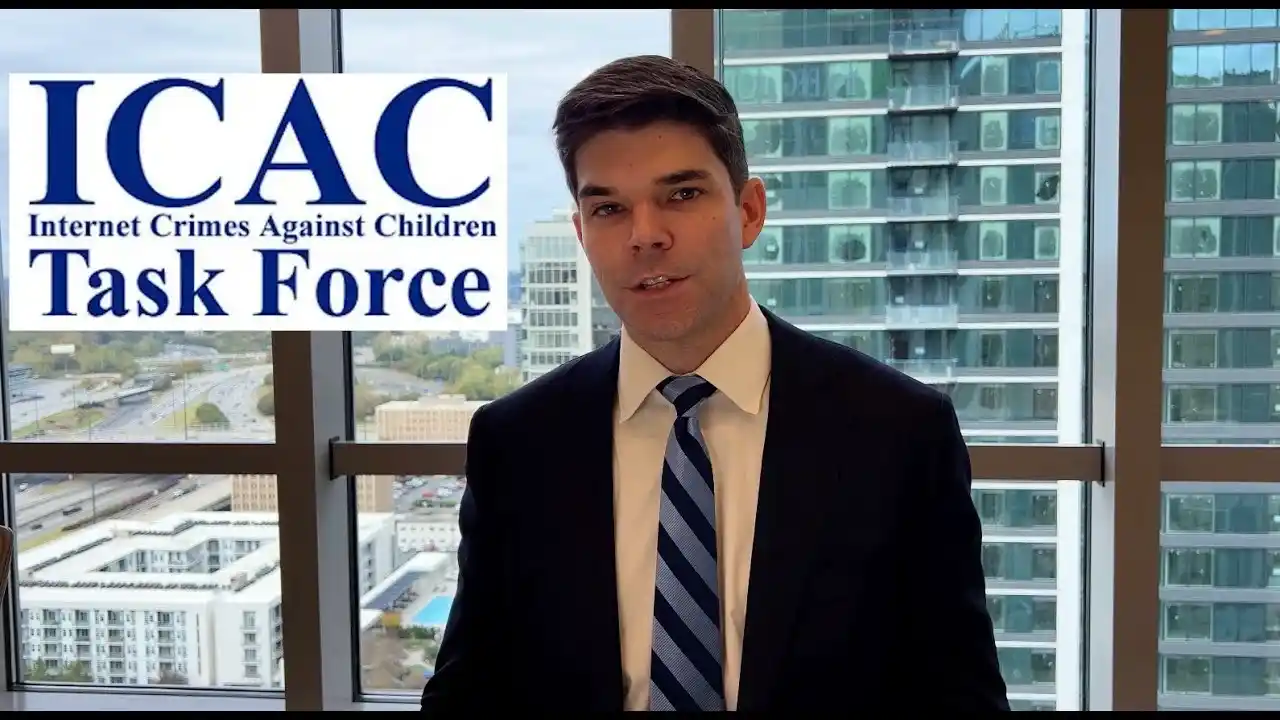
Solicitation of a minor is a serious internet sex crime that is treated harshly under Virginia law. The attorneys at Johnson/Citronberg have extensive experience in defending people accused of online solicitation of a minor. From our offices in Alexandria and Charlottesville, our skilled sex crimes attorneys have successfully handled these cases across Virginia, including Fairfax, Prince William, Loudoun, Arlington, Richmond, and Charlottesville. We work tirelessly to defend our clients and their reputations. Our team includes skilled Virginia Solicitation of a Minor Lawyers who are dedicated to providing a strong defense in these sensitive and high-stakes cases.
CALL US TODAY 855-959-4003
What is online solicitation of a minor in Virginia?
Online Solicitation of a Minor is a felony offense in Virginia. The law can be found at Virginia Code § 18.2-374.3, and generally it prohibits the use of a computer, cell phone, or any similar device to propose that a child perform a sexual act. Specifically, the law prohibits the following:
- Expose your genitals to a child;
- Propose that the child expose his or her genitalia;
- Propose that the child perform a sexual act;
- Entice/invite the child to a place in order to commit such acts.
Virginia law defines a “child” as anyone under the age of 18, but as discussed below, the penalties depend on the age of the child. If you are facing charges related to child sexual abuse, our team includes experienced child sexual abuse lawyers who can provide a strong defense and work to protect your rights throughout the legal process.
What are the penalties for Solicitation of a Minor in Virginia?
Under Virginia law, a person convicted of solicitation of a minor can be sentenced up to 10 years in prison if the victim is between 15 and 17 years old. If the victim is under the age of 15 and the defendant is more than 7 years older, Virginia law imposes a mandatory minimum sentence of 5 years in prison. Penalties increase significantly if someone breaks the same law a second time.
It should be noted that in the vast majority of cases involving internet sting operations, the “child” claims to be 14 or younger, thereby triggering the mandatory minimum sentence. A conviction will also cause an individual to have to register on Virginia’s sex offender registry. A conviction, however, can be sealed under Virginia Code § 19.2-392.12 unless the 5-year mandatory minimum applies. It is important to understand that a minor can be charged with sexual abuse in certain cases, and the penalties can vary depending on the specific circumstances and the age of the involved parties.
Related Practice Areas
Virginia Solicitation of a Minor Case Results
Pilot Found Not Guilty in Major Federal Drug Conspiracy Case
Our client was a pilot and retired military officer. He was accused of knowingly transporting a large quantity of cocaine from southern Texas to Atlanta. If convicted, he likely would have died in prison. We were able to show a jury that our client had no knowledge of the drugs on board his aircraft. The jury returned a not guilty verdict in less than an hour of deliberating.
Federal Judge in Eastern District of Virginia Gives Lowest Possible Sentence to Autistic Client
Our client, a federal employee, was convicted of federal child pornography charges. Based on his autism diagnosis, we convinced a federal judge to give the lowest sentence possible.
Time-Served Sentence in Major Federal Drug Conspiracy Case in Atlanta
Our client was facing life in prison after being charged in a wide-sweeping drug conspiracy case in the Northern District of Georgia. We were able to show that our client was abused by her husband and forced to ingest drugs, which led her becoming addicted. The judge determined that her culpability was the least of the many who were charged and granted our request for a sentence of ‘time-served’ which means no additional jail time. Our client was able to go home to her children the same day that she was sentenced.
Dismissal of Child Pornography Charges in Richmond, Virginia for Autistic Client
Our client, a working professional, was charged with distribution of child pornography after law enforcement raided his home. We helped our autistic client and convinced the court to defer all charges for dismissal due to his disability.
Testimonials from Our Clients
Maybel G.
Jess is known for his meticulous and strategic work style. At his firm, there is a culture of excellence and client focused dedication that is unmatched. He is very thorough during the entire legal process and always finds a way to solve client problems.
Rachel K.
Jess Johnson is the perfect attorney to overcome serious legal charges! He is very approachable & will use his expertise to give you the best criminal legal defense possible and I know this from personal experience. When you’re going through the scariest period in your life, you need the best lawyer on your side. I give him my highest recommendation!
What are undercover internet sting operations in Virginia?
An internet sting in Virginia involves law enforcement posing online as a minor to lure adults into sexual communication. People are typically arrested for this offense after communicating with the undercover officer and agreeing to meet somewhere. During these sting operations, the police will create a fake online profile or a fake posting on a website or cellphone application. When someone responds, the officer will normally state that he or she is a minor and then ask the person to send sexually explicit pictures or agree to meet somewhere. By sending a photo or agreeing to meet, the individual can find himself being charged with online solicitation of a minor.
The best way to defend yourself against criminal charges is to hire a lawyer as soon as possible. Contact us today to discuss how we can help your case.
What are the defenses to online solicitation of a minor?
The most common defenses to online solicitation of a minor in Virginia include lack of knowledge regarding the minor’s age and entrapment.
While people often wrongly assume that there are no defenses to solicitation of a minor charges, the arrested individual in these cases often believed that they were talking to an adult. In other cases. In other cases, the person may have been entrapped by law enforcement. To understand these legal defenses, it is important to first understand the background of internet sting operations in Virginia. Our team of criminal defense lawyers can help you navigate these complex issues and work to protect your rights throughout the legal process.
Virginia’s internet sting operations are largely conducted by the Internet Crimes Against Children (ICAC) Task Force which is comprised of law enforcement officers across Virginia. This Task Force is federally funded, and the amount of funds that it receives from the federal government is dependent on the number of people who are arrested in internet sting operations. Because the Task Force is motivated by the number of arrests, the members of the Task Force often engage in aggressive and unfair tactics. The result is that many innocent people are charged.
If you are facing child pornography charges in Virginia, please visit our Virginia child pornography page to learn how we defend those cases.
Defenses: You Didn’t Know it was a Child
To get a conviction, the Commonwealth has to show that the defendant “knew or had reason believe that the child was younger than 15 years of age.” Undercover officers will often engage in tactics to lead someone to think that they are talking to an adult. If the defendant did not believe the child was underage, there can be no conviction. An experienced internet sex crimes attorney will examine all of the surrounding circumstances (e.g., platform used, chat name, language used, length of the chat, exchanged photographs, etc.), to determine if this is a viable defense.
Here are some common tactics that we’ve seen law enforcement use to confuse or mislead someone into thinking they’re talking to an adult:
- Use a website or cellphone app that is for adults only.
- Mention their age in passing and only once.
- List an age on their profile that is 18 or older (or blank).
- Send photographs of themselves depicting an adult (we had one case where the photograph in question was of a 35-year-old woman but with a filter to make her appear younger).
- Target users in chats labeled “role play,” “fantasy,” or something similar.
- Use language to suggest that he or she is actually an adult engaged in role play.
- Engage in multiple chats with the same individual over days, weeks, or months (while only mentioning their age in a prior chat).
We have seen a number of cases where the undercover officer only briefly mentions an age in passing. If there is a long chat (or multiple chats) or if the individual was talking with many people at the same time, it is entirely plausible that he simply didn’t pay attention to the stated age or that he forgot what the officer stated earlier in the chat. We have also seen cases where our client fully believed that he was simply engaged in role play chat with an adult, and the officer used language to reinforce this belief.
What is entrapment?
Under Virginia law, entrapment consists of two elements: 1) the undercover officer induced the defendant to commit the crime; and 2) the defendant was not predisposed to engage in the crime. If the individual was entrapped by law enforcement into committing the offense, he cannot be guilty of solicitation of a minor in Virginia. Inducement generally means that the idea to commit the offense originated with the police, that the police used undue persuasion, and that the person would not have committed the act except for the police conduct.
In our experience, the most important element in any entrapment defense is establishing that the person would not have committed the crime but for the actions of the police. This means that the defense lawyer’s job is to show that his client never would have agreed to send a picture, or to meet with the child, if it wasn’t for the manner in which the sting operation was conducted.
To do this, we gather as much evidence as we can to show that our client had no sexual interest in children. This means gathering witnesses (such as family members, close friends, and prior lovers) to testify about our client’s traits and that our client was never interested in children. As discussed below, we also use psychological experts and computer forensic experts to bolster this defense. We also closely scrutinize the chats themselves to see if our client was reluctant to continue the chats, if the officer attempted to persuade our client into doing or saying something, and if the officer violated any ICAC rules or regulations.
Using Expert Witnesses
In addition to analyzing all the surrounding circumstances of the chats in question, a good sex crimes attorney will also employ expert witnesses to reinforce the defense’s theory of the case. To support the defense that the defendant did not know the age of the “child,” a psychologist or psychiatrist can perform a psychosexual evaluation on the defendant and then testify that the defendant is not sexually interested in children. Similarly, with an entrapment defense, a psychologist or psychiatrist can testify that the defendant lacked the motive to solicit a minor. Such testimony is powerful evidence that the defendant never intended to commit a crime and is therefore innocent.
The defense can also employ a computer forensic expert to show that the defendant never chatted with other children and that his computer history only showed an interest in adults (e.g., search history, search terms, adult pornography). In cases involving false allegations of child pornography, our experienced legal team can help build a defense by challenging the evidence and working to prove that the accusations are unsubstantiated.
Do I need a lawyer who specializes in internet sting and solicitation of a minor cases?
Yes, hiring a lawyer who specializes in internet sting and solicitation of a minor cases is absolutely critical. These cases involve a deep understanding of technical issues and computer forensics.
Our Virginia criminal defense lawyers know how to defend against charges alleging online solicitation of a minor. We have helped dozens of clients obtain pretrial dismissals and reductions. If you or someone you know is facing an online solicitation of a minor charge, contact our firm for immediate help. We have offices in Alexandria and Charlottesville, and we represent clients throughout Virginia.
Meet Our Attorneys

Jess Johnson
Jess B. Johnson is a Partner & Founder at Johnson/Citronberg, PLLC with more than 15 years of experience in criminal defense and civil litigation. He represents clients in federal courts across the country and is licensed in Georgia, Virginia, and Washington, D.C. Jess has handled complex investigations, trials, and appeals for elected officials, business leaders, whistleblowers, and individuals. He has secured dismissals, acquittals, favorable sentences, and major whistleblower awards. A University of Georgia graduate, Jess was selected as a “Rising Star” by Super Lawyers Magazine every year since 2012.
View Profile
Cary Jacob Citronberg
Cary Jacob Citronberg is the Partner and Founder of Johnson/Citronberg, PLLC in Alexandria, Virginia, where he focuses on federal and state criminal defense matters. Licensed in Virginia since 2011, he brings more than 14 years of courtroom experience along with a strong record of advocacy. Cary received his J.D. from Georgetown University Law Center in 2010 after earning his B.A. from Northwestern University in 2006. His work has been repeatedly recognized by Super Lawyers, with selections as a Rising Star from 2016 through 2021 and to the Super Lawyers list from 2022 through 2025.
View Profile
